Why technical manuals need more than translation
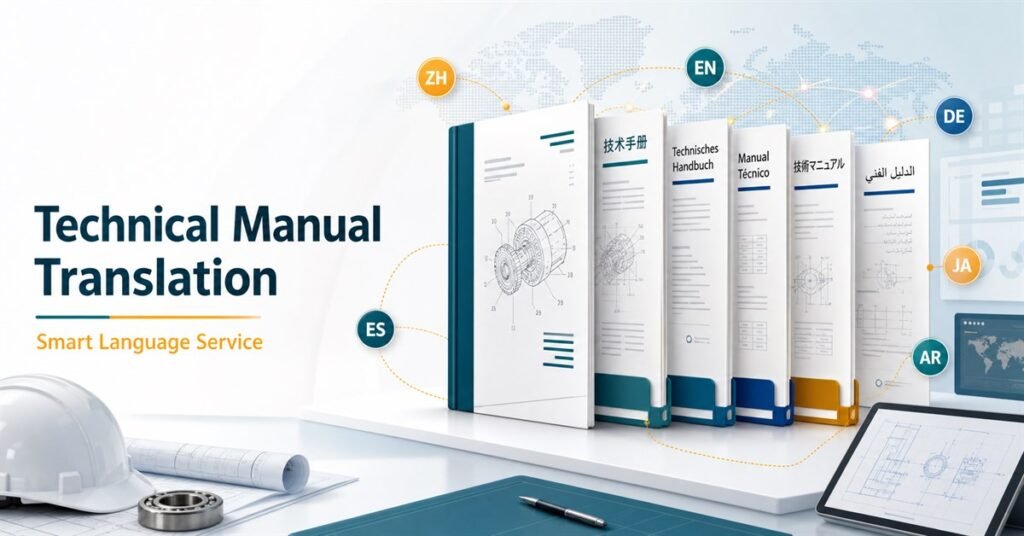
Technical manuals are not ordinary marketing copy. They carry safety instructions, installation steps, maintenance procedures, troubleshooting logic, warranty conditions, and product knowledge that people rely on in real work. When a manual is translated too literally, the words may look correct, but the operational meaning can become unclear. A small inconsistency in a warning label, a unit of measurement, or a part name can slow down support teams and create unnecessary risk for users.
For global teams, the challenge is even larger. Engineers, distributors, local service partners, and end customers may all read the same manual for different reasons. One group needs precise terminology, another needs clear step-by-step guidance, and another needs legally consistent safety wording. A strong translation process has to protect all of these needs at the same time.
Common problems in manual translation projects
Many technical manual projects run into trouble before translation even begins. Source files may exist in several formats, diagrams may contain embedded text, product names may be used inconsistently, and older manuals may not match the latest product version. If these issues are not discovered early, translators have to guess, reviewers spend more time correcting avoidable mistakes, and the final document can feel uneven across languages.
Another common problem is layout. A sentence that fits neatly in English may become longer in German, Spanish, Japanese, or Chinese. Tables, captions, callouts, and warning boxes can break after translation. If formatting is treated as an afterthought, the translated manual may technically contain the right information while still being hard to use.
What a stable workflow includes
A reliable technical manual project starts with preparation. The team should confirm file formats, product scope, target markets, terminology sources, reviewer roles, and delivery requirements. Before translation starts, a glossary should define product names, component names, UI labels, measurements, and recurring phrases. This helps every language team make the same decisions instead of solving the same problem five different ways.
During translation, linguists need context. Screenshots, diagrams, reference manuals, product photos, and previous translations all improve accuracy. Technical reviewers should focus on product correctness, while language reviewers focus on readability and consistency. Separating these responsibilities keeps feedback clear and prevents the review process from becoming chaotic.
Quality checks that matter
Good quality assurance is more than spell-checking. A manual should be checked for terminology consistency, missing numbers, unit conversion errors, broken references, inconsistent warnings, and formatting problems. Headings, tables of contents, image labels, step numbers, and cross-references should also be reviewed after layout is complete. This final check is important because many problems appear only after the translated text is placed back into the original design.
For regulated or safety-sensitive products, the review process should be even more disciplined. Warning levels, compliance language, and required disclaimers must be preserved carefully. The goal is not only to make the text fluent, but to make the manual reliable for real operation.
How Smart Language Service helps
Smart Language Service supports technical manual translation with specialist linguists, terminology management, multilingual formatting support, and structured quality checks. We help teams prepare source materials, align terminology, translate into target languages, review technical accuracy, and deliver files that are ready for publication.
The result is a manual that reads naturally in each language while staying faithful to the original product logic. For companies expanding into multiple markets, this creates a smoother experience for users, distributors, and internal support teams. It also reduces rework, shortens review cycles, and helps the translated documentation become a practical asset instead of a last-minute bottleneck.